Selling You Back to Yourself: The Trillion-Dollar Wellness Trap
Somewhere between your third adaptogen latte and the push notification reminding you to journal, something went quietly sideways. The self-care movement — once a radical act of saying no to hustle culture — has been fully absorbed, repackaged, and sold back to you at a 40% markup with free shipping on orders over $75.
Welcome to the loneliness economy. Population: all of us.
How 'Rest' Got a Price Tag
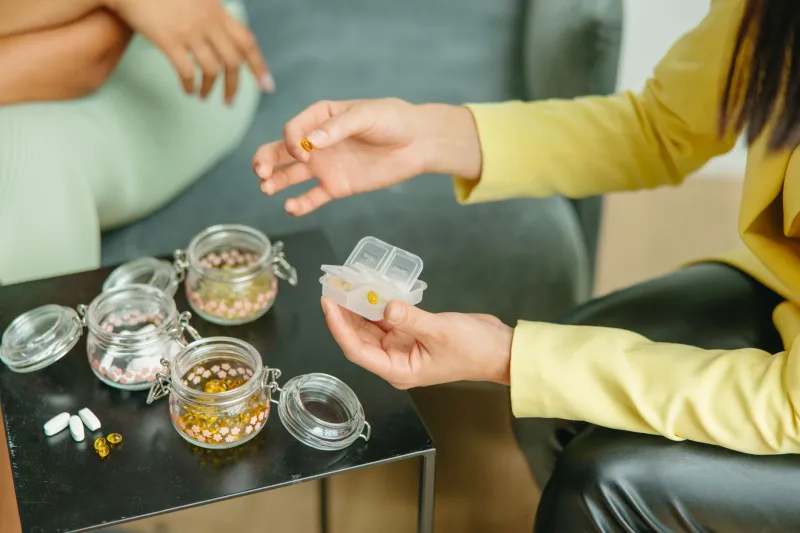
The global wellness market is now valued at roughly $4.5 trillion. That number is so large it almost stops meaning anything — until you zoom in on what it actually contains. Meditation apps. Gut health supplements. Breathwork certifications. Sleep optimization devices. "Community" memberships that cost more per month than a gym. The industry has identified every single crack in the modern American psyche and engineered a product to fill it.
And the cracks are real. That's the uncomfortable part. Loneliness rates in the US have been climbing for decades. The surgeon general officially declared it a public health epidemic in 2023. Social trust is at historic lows. People are genuinely struggling, genuinely isolated, genuinely looking for something that feels like meaning or connection or, at minimum, a Tuesday that doesn't feel like slow suffocation.
The wellness industry didn't manufacture those feelings. But it absolutely learned to monetize them with surgical precision.
The Insecurity Pipeline
Here's how the pipeline works, and once you see it you can't unsee it. First, you're made aware of a deficiency — your cortisol levels, your attachment style, your dopamine menu, your nervous system regulation. The language is clinical enough to feel authoritative, spiritual enough to feel meaningful. Then the solution arrives, conveniently, in the form of something purchasable.
The coaching certification industry is a particularly sharp example. The International Coaching Federation estimates there are now over 100,000 certified coaches operating globally, a number that has more than doubled in a decade. Life coaches, wellness coaches, trauma-informed coaches, human design readers, somatic practitioners — a significant portion of whom were themselves recent consumers of the wellness industry before pivoting to sell access to it. The student becomes the teacher becomes the product.
There's nothing inherently wrong with any individual piece of this. Therapy is good. Movement is good. Community is genuinely essential to human health. The problem is structural: when the dominant cultural response to systemic loneliness is individual consumption, the system that created the loneliness doesn't have to change. You just have to buy better.
The Productivity Rebrand
Self-care used to be a political concept. Audre Lorde wrote about it in 1988 as an act of resistance — specifically for Black women navigating a society designed to exhaust them. It was about preservation in the face of structures that wanted you depleted. It was explicitly not about bubble baths.
Somewhere in the Instagram era, that politics got laundered out. What replaced it was essentially productivity culture wearing a robe. Your morning routine became a performance of optimization. Rest was reframed as a tool for better output. Even the language of "protecting your peace" quietly shifted from a boundary-setting practice to an aesthetic — something you could demonstrate via carefully lit Stories featuring eucalyptus and a silk pillowcase.
The result is a peculiar kind of exhaustion: people who are doing all the self-care things and still feeling terrible, and who then assume the problem is that they need more self-care. Another app. A better supplement stack. A coach who specializes in exactly their specific flavor of burnout.
The Backlash Is Getting Louder
But something is shifting. You can feel it in the cultural conversation, in the growing number of viral posts from people who spent years deep in the wellness ecosystem and emerged feeling hollower than when they started. There's a whole genre of essay now — the wellness dropout memoir — in which someone catalogs their journey from green juice devotee to skeptic, usually arriving at the conclusion that what actually helped them was something free and inconveniently low-margin: a real friendship, a walk without a podcast, cooking a meal for someone else.
The backlash isn't anti-health. Nobody's arguing that sleep is bad or that therapy is a scam. The critique is more specific: that the commodification of wellbeing has made genuine rest feel inadequate unless it's also productive, that community has been replaced by subscription models, and that the relentless focus on individual optimization is a distraction from the collective conditions making everyone so miserable in the first place.
Some of the most interesting cultural voices right now are the ones arguing for what you might call radical ordinariness — the idea that a lot of what ails us can't be fixed by a better routine, only by slower, messier, less monetizable things. Showing up for people. Being bored sometimes. Letting a friendship develop without a shared "accountability framework."
What Actually Costs Nothing
The uncomfortable truth the wellness industry can't sell you is that a lot of the things humans actually need to feel okay — genuine belonging, purposeful work, adequate rest, physical safety, communities built on reciprocity rather than transaction — are either structurally unavailable to a lot of people or simply resistant to being packaged.
You cannot download your way to feeling less alone. You cannot supplement your way into a society that actually takes care of its people. And you cannot buy your way into the kind of rest that comes from not being constantly afraid.
That's not a product failure. That's a design feature of an industry that profits from the gap between what it promises and what it delivers.
The most radical self-care, it turns out, might just be refusing to believe that every human need has a corresponding SKU.