The New Flex Is an Empty Calendar: How Boredom Became a Luxury Good
Picture the wealthiest person you know, or the wealthiest person you follow, or the wealthiest fictional archetype you carry around in your head. Now ask yourself: are they hustling?
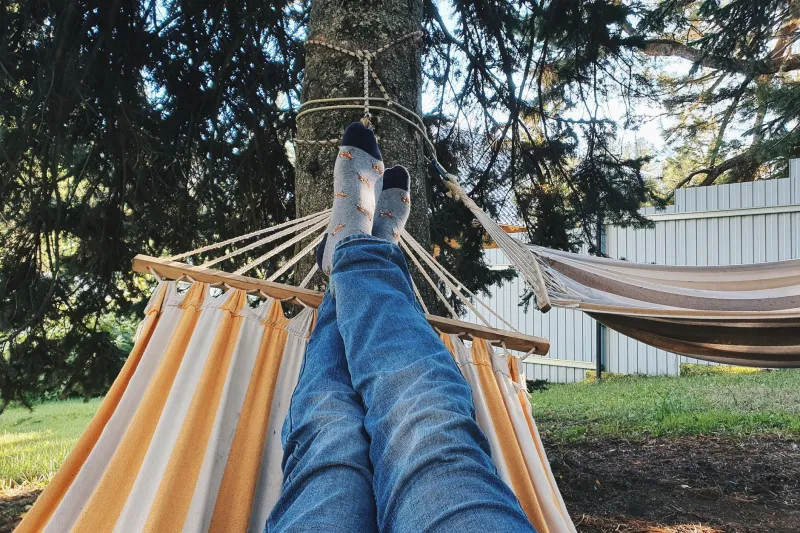
Probably not. They're at a lake house with no cell service. They're on a long, unscheduled walk. They're sitting somewhere beautiful doing something that doesn't scale, doesn't monetize, and doesn't need to be documented. They are, by every metric our culture spent the last fifteen years celebrating, completely unproductive.
And that is exactly the point.
The Hustle Culture Hangover
The 2010s sold us a specific dream. Rise and grind. Sleep when you're dead. Your passion should be your paycheck and your paycheck should be your passion. Gary Vee was everywhere. LinkedIn became an arena where people competed to describe their 5 a.m. routines with the gravity of Olympic training logs. Having a side hustle wasn't just financially practical — it was a personality trait, a moral signal, proof that you were the kind of person who wanted it enough.
The working and middle classes absorbed this messaging hardest, partly because they had to. Multiple income streams aren't a flex when rent requires them. The gig economy rebranded economic precarity as entrepreneurial freedom, and a lot of people — exhausted, stretched thin — genuinely believed the branding because the alternative was too bleak to sit with.
Meanwhile, the actually wealthy were doing something different. They were getting quiet.
Scarcity Has Inverted
Here's the cultural mechanic at work: status symbols track scarcity. For most of human history, leisure was scarce and labor was abundant — so leisure signaled wealth. The landed gentry didn't work. That was the whole point. Then industrialization and eventually the knowledge economy made busyness the scarce, desirable thing. Being needed, being in demand, being constantly in motion — these became signals of importance.
But somewhere in the last few years, the inversion has started to flip back. Attention is now the scarcest resource. The ability to be unreachable — no Slack notifications, no content calendar, no brand to maintain — has become nearly impossible for most people to access. Which means, almost by definition, it's become precious.
The old rich could afford things. The new rich can afford not to — not to hustle, not to optimize, not to perform productivity for an audience. That negative space is the flex.
What Unstructured Time Actually Signals
Consider what a genuinely empty afternoon communicates in 2024. No side project. No networking event. No workout tracked on an app. No content to post about the workout. Just... time, unaccounted for and unbothered.
For most Americans, this is either a fantasy or a source of guilt. We've been so thoroughly trained to fill every gap — with a podcast, with a scroll, with a task pulled from a productivity app — that actual stillness feels like a system error. Research consistently shows that people will choose to do something mildly unpleasant rather than sit alone with their thoughts for even a few minutes. We are, collectively, terrible at doing nothing.
The elite leisure class has figured out that this is a differentiator. Wellness retreats that confiscate your phone aren't just selling relaxation — they're selling the experience of being the kind of person who can tolerate their own company without external stimulation. Silent meditation retreats. Analog vacations. Long dinners with no photographable food moments. These experiences are expensive partly because of their amenities and partly because they're inaccessible in the deeper sense — most people couldn't psychologically survive them.
Boredom as Cognitive Privilege
There's a neurological argument here too. Boredom, real boredom — the kind that makes your mind wander without destination — is actually generative. It's associated with creativity, with the kind of diffuse thinking that produces unexpected connections. The default mode network, which activates during mind-wandering, is linked to imagination, empathy, and self-reflection.
Constant stimulation suppresses all of that. The scroll is specifically engineered to prevent your brain from ever reaching the boredom threshold where interesting things start to happen. And if you're chronically under-resourced — financially, temporally, emotionally — you're more dependent on cheap stimulation because genuine rest requires a baseline of security that's hard to maintain when you're stressed.
In other words, the capacity to be productively bored is partly a function of privilege. You need enough financial stability not to be in crisis mode. Enough time sovereignty to have unscheduled hours. Enough psychological safety to not need constant distraction from your circumstances. Boredom, properly understood, is something you have to be able to afford.
The Anti-Personal-Brand
Nothing captures this shift more sharply than the growing cultural cachet of people who simply don't have a personal brand. The most interesting people at certain levels of creative and financial success are conspicuously absent from social media, or present in ways that are clearly unoptimized — blurry photos, no consistent aesthetic, long gaps between posts.
This used to read as irrelevance. Now it reads as confidence. The implicit message is: I don't need your attention to validate my existence. That's a power move, and it's only available to people whose existence is already validated by other means — money, reputation, relationships that predate the internet.
For everyone else, the personal brand isn't optional. It's infrastructure. Which is precisely why abandoning it signals that you've moved beyond needing it.
Reclaiming Boredom Without the Trust Fund
None of this means that the rest of us are simply locked out of stillness. But it does mean being intentional about reclaiming it in ways that don't require a $4,000 digital detox retreat.
The subversive act, right now, might just be leaving your phone in another room for an hour. Taking a walk without an audio input. Sitting with the mild discomfort of having nothing to do and not immediately solving it. These aren't revolutionary gestures — but in a culture that has monetized every waking moment and sold busyness as virtue, they're at least a quiet refusal.
The empty calendar isn't just a status symbol. It's a reminder that your time belongs to you — even if the entire economy has been designed to make you forget that.