Selling Realness: How the 'Unfiltered You' Became Someone Else's Brand Strategy
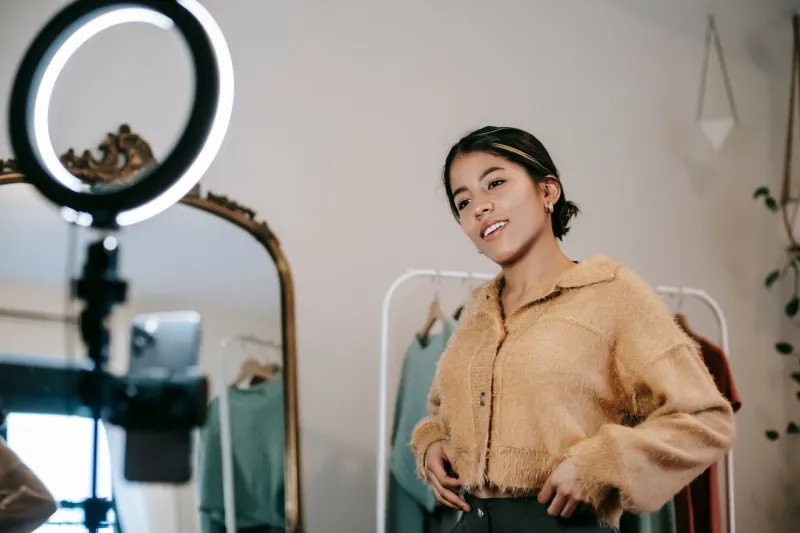
There's a creator somewhere right now filming herself crying in her car. She's not performing grief — or maybe she is, and the line has gotten so blurry that the distinction barely matters anymore. What's certain is that by the time she hits post, an algorithm will measure exactly how long you watch before scrolling, a brand will note her engagement-to-follower ratio, and somewhere in a glass-walled office, a social media strategist will call the clip "incredibly authentic content."
Welcome to the authenticity industrial complex — where your most unguarded moments aren't just relatable, they're revenue-generating.
The Paradox Nobody Wants to Name
We built the internet on the promise of real connection. Early social media was genuinely messy — bad lighting, typos, oversharing in ways people would later delete. But somewhere between the first sponsored post and the rise of the "raw and honest" content genre, something shifted. Authenticity stopped being an accident and became a product category.
The tell is in the language. Creators now talk openly about "authentic content strategies" and "vulnerability arcs." Brands brief influencers to "seem genuine." Platforms reward confessional posts with algorithmic boosts because, as any engagement data will show you, emotional honesty performs. A teary-eyed admission of burnout outperforms a polished promotional post almost every time — and the industry has absolutely clocked that.
What we've ended up with is a market for realness. And like any market, it has winners, losers, and a whole infrastructure built to extract maximum value from the raw material — which, in this case, is you.
The Metrics of the Soul
Here's where it gets genuinely strange. Platforms like TikTok and Instagram have made it possible to quantify emotional resonance in real time. A confession about anxiety gets 40,000 saves. A breakup story drives 200 comment-thread conversations. These numbers don't just measure connection — they assign value to it. Your most private experiences now have a data profile.
And creators, being human beings who need to pay rent, learn from this feedback loop. They figure out which truths land, which struggles resonate, which confessions make people feel seen enough to share. Then they produce more of that. The authentic moment becomes a content pillar. The vulnerable post becomes a series.
This isn't necessarily cynical on the creator's part — it can start from a genuinely real place. But the process of optimization changes the nature of the thing. You can't simultaneously be unguarded and strategic about your lack of guard. At some point, the authenticity is the performance, even if the feelings underneath it are completely real.
Platforms Are the Quiet Beneficiaries
Let's not lose sight of who's really winning here. Creators earn money, sure — but the platforms earn more, and they earn it off content they didn't produce, from emotional labor they didn't perform, using personal disclosures they didn't make.
When a creator's mental health journey goes viral, TikTok captures ad revenue from every view. When someone's divorce confession becomes a trending audio, Instagram's engagement metrics improve. The platform didn't take the risk of being vulnerable. It didn't sit in the car and cry. It just built the stage, set the lighting, and kept the door receipts.
There's a useful comparison here to early reality television. Networks discovered in the late '90s and early 2000s that ordinary people being their unscripted selves was cheaper to produce than scripted content and often more compelling to watch. The people on those shows were paid, but the structural asymmetry — network profits versus contestant exposure — was always uncomfortable. Social media has replicated that dynamic at a scale that makes Survivor look like a community theater production.
What Happens to the Parts That Don't Perform
One of the quieter costs of the authenticity economy is what it does to the parts of yourself that don't convert. If you've spent enough time online as a creator or even just an active poster, you've probably felt it — the impulse to frame a real experience in terms of how it'll land. The thought, mid-crisis: this would make a good story.
That's not a personal failing. It's a conditioned response to a system that has consistently rewarded the documentation of experience over the experience itself. But it does something subtle and corrosive to the way we process our own lives. When every moment is a potential asset, the moments that don't translate — the quiet grief, the undramatic confusion, the feelings too complicated to caption — start to feel somehow less valid.
The authenticity industrial complex doesn't just monetize your real self. It quietly teaches you to be suspicious of the parts of your real self that aren't marketable.
Can You Buy Back Your Own Realness?
Some creators are pushing back, deliberately. Posting without context, refusing to explain, letting content be incomplete. Deinfluencing — the trend of telling audiences what not to buy — became its own content format, which is maybe the most on-brand possible outcome. Even the resistance gets productized.
That's the trap. Every counter-move within the system gets absorbed by the system. Authentic rebellion becomes an aesthetic. Opting out becomes a brand identity. The only genuine exit is full withdrawal, and most people — especially those whose livelihoods are tied to their online presence — can't afford that.
What we can do, maybe, is get clearer about what we're participating in. The next time a creator's confession makes you feel deeply seen, that feeling is real — human connection is still happening in these spaces, and that matters. But it's worth holding simultaneously the awareness that the moment was also engineered, also profitable, also part of a machine that doesn't particularly care about either of you.
Realness is still out there. It's just gotten very good at wearing a ring light.